0%

Selecting a Beverage Filling Machine is less about buying the fastest line and more about matching equipment to your product. A machine suited to still water may not handle carbonated drinks, thick juices, or products with pulp equally well. Product behavior matters.

Start with the details of your operation: beverage type, container material, bottle or can sizes, target output, and expected changeovers. Then compare filling technologies and confirm which ones suit your product. For carbonated beverages, for example, ask how the system manages pressure and foam. For viscous drinks, check whether the filling method supports consistent flow and accurate portions. Small details count.

A supplier’s rated speed is only one part of the picture. Actual performance can depend on container handling, cleaning routines, operator training, and the rest of the production line. And a brochure is not a production trial. Request a demonstration or product test when practical, and ask how performance is measured. It may reveal limitations that specifications alone do not show.

Also consider setup time, sanitation access, maintenance needs, spare-part availability, and technical support. Compare total operating requirements, not just the purchase price. Ask suppliers to clarify assumptions behind quoted speeds and accuracy figures. Check that the machine can accommodate your current containers and likely product changes. The best choice is rarely the most complicated one. It is the machine that fits your process reliably, with room for realistic growth. This guide explores the questions and trade-offs that help buyers make that decision with care.
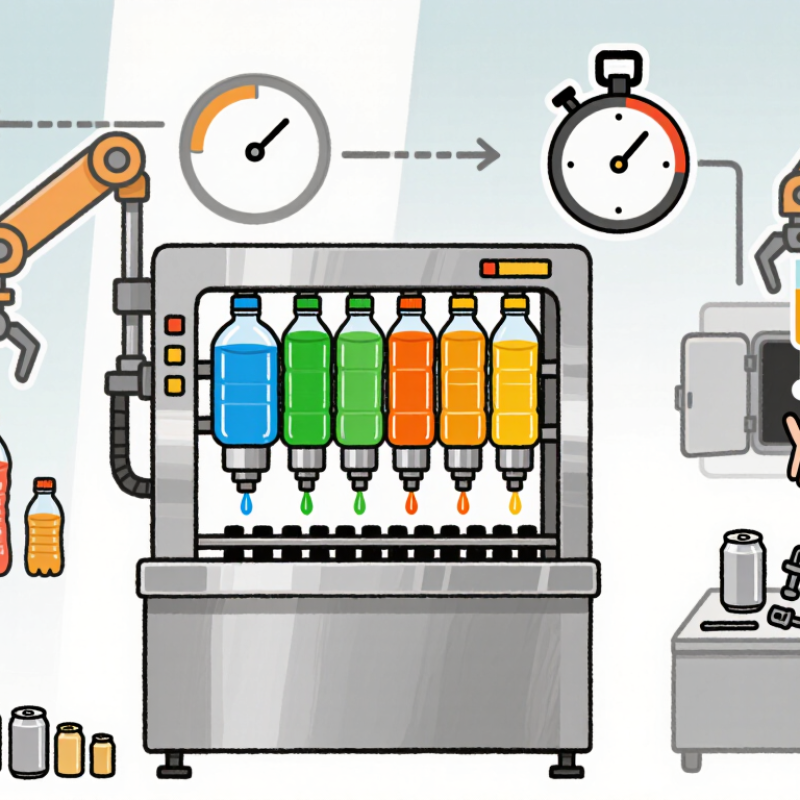
How to Choose the Best Beverage Filling Machine

Define Your Beverage, Container, and Production Requirements

How to Choose the Best Beverage Filling Machine

Define Your Beverage, Container, and Production Requirements

Start with the beverage, not the machine catalog. Water, pulpy juice, syrup, and carbonated drinks behave differently during filling. Record viscosity, temperature, foam tendency, and particle size. A thick smoothie may need a different pump and nozzle than clear tea. For sparkling drinks, ask how pressure and foaming are controlled. A fast fill is no good if fill levels vary.

Then measure the container, including its material, shape, opening, and closure. A narrow-neck bottle may need different handling from a wide-mouth jar. Confirm the machine can accommodate your actual container range, not just one sample. Production plans matter, too. Estimate containers per hour, daily operating time, changeovers, and cleaning downtime. I would treat early output estimates cautiously: planned speeds often look better on paper than during real changeovers. Small details matter.

Tips: Bring filled product and empty containers to a machine trial. Check fill accuracy, foam, drips, and changeover time. Measure real output. If you are unsure about a requirement, record it as an open question rather than guessing.

Compare Filling Technologies and Machine Types

Filling technology should match a drink’s behavior, not just its label. Gravity fillers suit still, free-flowing liquids such as water or thin juice. Piston systems handle thicker products and some pulpy drinks by dispensing a measured volume. Particle size still matters. Pulp can clog a nozzle, so test the actual recipe before selecting a machine. Overflow fillers create a consistent visible level in clear containers, but excess product may need to be recovered and the system cleaned carefully. For carbonated beverages, pressure fillers keep liquid under pressure during filling, helping limit foaming and carbon dioxide loss. It depends.

Machine format matters too. A single-head or semi-automatic unit can suit pilot runs and frequent product changes, though operators must load containers and monitor each cycle. Linear machines offer multiple filling stations in a straight line and can balance output with easier access. Rotary machines suit higher-volume lines but need more space and can make changeovers more involved. Compare real changeover time, not rated speed alone. Ask about clean-in-place features, product-contact materials, and nozzle access; an awkward valve can turn routine sanitation into downtime. Measure your smallest and largest containers, then trial the machine using your actual drink at realistic temperatures. Check the seals.

How to Choose the Best Beverage Filling Machine - Compare Filling Technologies and Machine Types

Category Technology or machine type How it works Best suited for Key advantages Considerations
Filling technology Gravity filling Product flows into the container under gravity, usually for a preset time or until a level is reached. Free-flowing, non-carbonated liquids such as water and some still beverages. Simple operating principle and relatively straightforward equipment. Performance can be affected by changes in product flow, temperature, or viscosity; generally unsuitable for carbonated drinks.
Filling technology Level / overflow filling A filling nozzle and return path fill each container to a set liquid level; surplus product flows back or is recirculated. Still beverages where a consistent visible fill line matters, especially in transparent containers. Provides a uniform-looking fill height across containers. Equal fill height does not necessarily mean equal fill volume if container capacity varies; foaming products may need careful setup.
Filling technology Piston / volumetric filling A piston draws a measured volume into a cylinder and dispenses it into the container. Thicker beverages, purées, syrups, and products with small suspended pieces, depending on valve and nozzle design. Meters by volume and can handle products that are too viscous for many simple gravity systems. Product-contact parts require cleaning; particle size, viscosity, and product consistency must match the equipment design.
Filling technology Electromagnetic flowmeter filling An electromagnetic meter measures the flow of a conductive liquid and stops filling at a target volume. Conductive, water-based beverages, including many juices and other liquid products. No moving measuring parts in the flow path; supports controlled volumetric dosing. The liquid must have adequate electrical conductivity. Suitability depends on product properties and the meter’s operating conditions.
Filling technology Mass flowmeter filling A mass flowmeter measures product mass during dispensing; the system can use product density to determine the corresponding volume when required. Applications requiring mass-based dosing or measurement that is less dependent on density changes than volume-only measurement. Can provide direct mass measurement and may help manage variation in product density. Typically involves higher equipment and integration complexity; confirm compatibility with product, line speed, and cleaning requirements.
Filling technology Counter-pressure filling The container is pressurized, commonly with carbon dioxide, before product is introduced under controlled pressure. Carbonated beverages such as sparkling water, soda, and beer. Helps limit foaming and reduce carbon dioxide loss during filling. Requires pressure-rated equipment and control of pressure, temperature, and filling conditions.
Machine type Inline filler Containers move in a straight line past filling heads, often with indexing or continuous conveyance. Small to medium production lines, frequent product changes, and layouts where a straight conveyor path is practical. Accessible layout and generally straightforward changeovers and maintenance access. Required floor length and output depend on the number of filling heads, container handling, and line configuration.
Machine type Rotary filler Containers are carried around a rotating carousel and filled at multiple stations during rotation. Medium to high-output lines with stable product and container formats. Multiple stations can fill containers in parallel within a compact footprint. May involve greater initial investment and more involved changeovers than a simpler inline setup.
Machine type Semi-automatic filler An operator positions or loads containers, while the machine controls the dispensing cycle. Pilot production, small batches, or operations with frequent container and product changes. Flexible setup with less automation and lower throughput requirements. Output depends heavily on operator handling and is generally lower than on a fully automated line.

Selection note: Actual filling accuracy, output, and product compatibility depend on the specific machine design, container, liquid properties, operating conditions, and cleaning requirements. Confirm performance with the equipment supplier using the intended product and package.

Evaluate Hygiene, Accuracy, and Automation Features

How to Choose the Best Beverage Filling Machine

Evaluate Hygiene, Accuracy, and Automation Features

A filler should be easy to clean, not merely fast. Look for smooth product-contact surfaces, sloped areas that drain fully, and accessible valves and seals. Clean-in-place capability helps, but only when spray coverage and cleaning cycles are validated for the actual beverage.

The WHO’s 2015 foodborne-disease estimates attribute 600 million illnesses and 420,000 deaths worldwide each year to contaminated food. These figures cover food broadly, not filling machines specifically, but they show why hygiene deserves serious attention.

For accuracy, ask suppliers to demonstrate fill variation using your product, container, and line speed. Foamy drinks, temperature shifts, and bottle changes can expose problems that a showroom test misses. Check calibration procedures and how the system detects underfills or rejects.

Automation also matters: Deloitte and MAPI’s 2023 smart-manufacturing survey found that 86% of manufacturing executives expected smart factories to drive competitiveness within five years. That is a broad manufacturing finding, not a promise of savings for every beverage line. Still, it makes integration, operator training, and usable production data worth evaluating.

Tips: Bring real containers and product samples to a machine trial. Ask operators to inspect changeover and cleaning steps, not just watch a fast run. Request logged fill-weight results across several hours. And be candid: a highly automated line can still create headaches if staff cannot troubleshoot its sensors.

Check Compatibility, Capacity, and Future Expansion

Choosing a beverage filling machine starts with the product and its container. Water, syrup, and foaming juice behave differently at the filling valve. Note viscosity, carbonation, pulp, and filling temperature, then check that the machine handles your actual range. Bottle height, neck diameter, cap type, and label space also affect changeovers. Test representative product samples when possible. Small details matter.

Capacity needs a realistic estimate. A machine’s rated speed may not match daily output once rinsing, changeovers, cleaning, and short stops are included. Ask for expected production rates with your container and liquid, not a best-case figure. Check fill accuracy and how rejected bottles are detected. Leave room for peak demand, but avoid paying for speed your team cannot use. A spreadsheet can make this look simpler than it is.

Consider what may change over the next few years. You might add a bottle size, a second shift, or another filling head. Look for accessible adjustment points, available floor space, and compatible conveyor connections. Confirm utility needs, control-system options, and whether extra stations can be added without replacing the whole line. Not always. Expansion plans often shift, so document assumptions and revisit them before purchase.

How to Choose the Best Beverage Filling Machine

Compare calculated beverage output across container sizes and filling rates to help assess capacity needs and room for future expansion.

How to read this: Output is calculated as containers per minute × fill volume × 60. The 60, 120, and 240 containers-per-minute rates are example planning scenarios, not specifications for any particular machine. Actual throughput depends on the beverage, container, filling method, and operating conditions. Check product and package compatibility, then allow capacity headroom for demand growth.

Assess Total Cost, Support, and Supplier Reliability

A beverage filling machine’s purchase price is only the visible part of its cost. Estimate installation, operator training, change parts, utilities, and planned maintenance before comparing quotations. Ask suppliers for a three-to-five-year cost estimate that includes consumables and likely downtime. Small items add up. A filler rated for 6,000 bottles per hour may still be expensive if a product change takes an hour.

Support becomes important when a line stops with partly filled bottles on the conveyor. Ask how quickly technicians respond, whether remote troubleshooting is available, and which spare parts are stocked locally. Request clear service terms and training for your operators. That matters. A fast response promise is less useful if nobody can explain what it covers. I would also check the fine print; service packages can be harder to compare than machines.

Supplier reliability takes more than a polished quotation. Speak with customers who run similar bottle sizes and production volumes, and ask about actual maintenance delays. If possible, inspect a machine in operation and review its acceptance-test records. Check that manuals, parts lists, and maintenance schedules are complete. Even careful checks leave some uncertainty; a reference may describe an easier installation than yours. Consider how the supplier handles problems after delivery, not just how confidently they answer questions before the order.

FAQS

What should I define before choosing a beverage filling machine?

Record the drink’s thickness, temperature, foam tendency, and particle size. Also note container shape, opening, material, and closure. Small details matter.

How can I match a filling method to my beverage?

Gravity filling often suits still, free-flowing drinks. Piston systems can handle thicker liquids, while pressure filling helps limit foam in carbonated drinks. Test the actual recipe, especially if it contains pulp.

What should I check when filling pulpy juice?

Measure the pulp size and check whether it could clog the nozzle. Run a trial with the real recipe. I would not rely on a clear-liquid test.

Should I choose a single-head, linear, or rotary machine?

A single-head unit can suit pilot runs and frequent product changes. Linear machines provide several accessible filling stations. Rotary machines can support higher volumes, but may need more space and longer changeovers.

How can I tell whether the machine’s rated speed is realistic?

Run your beverage in your actual containers at realistic temperatures. Check fill accuracy, foam, drips, and time needed for changeovers. Measure output, not just the advertised rate.

What container details should I confirm?

Check the smallest and largest containers you plan to use. A narrow-neck bottle may need different handling from a wide-mouth jar. One sample container is not enough.

What costs should I compare beyond the purchase price?

Include installation, training, change parts, utilities, maintenance, and likely downtime. Ask for a three-to-five-year estimate. Small costs add up.

How should I assess supplier support and reliability?

Ask about technician response times, remote troubleshooting, local spare parts, and operator training. Review service terms, manuals, and maintenance schedules. References help, but they may not reflect your installation exactly.

Conclusion

Choosing the right Beverage Filling Machine begins with a clear understanding of your product, container type, and expected production volume. Beverage characteristics such as carbonation, viscosity, and sensitivity to oxygen can influence which filling technology is most suitable. Compare machine types and filling methods carefully, then consider how well each option handles your container sizes, required output, and desired level of automation.

A reliable choice should also support hygienic operation, consistent fill accuracy, and efficient cleaning. Check that the equipment can fit your current production setup and adapt to future growth or new product formats. Beyond the purchase price, assess installation, maintenance, spare parts, and ongoing support to understand the total cost of ownership. A thorough comparison of performance, compatibility, service, and supplier reliability can help you select equipment that meets both immediate needs and long-term production goals.

Olivia

Olivia

Olivia is a dedicated marketing professional with a strong understanding of the company’s products and the needs they are designed to address. Through careful research and close collaboration with colleagues across the business, Olivia turns product knowledge into clear, practical insights that......