1. High-Precision Isobaric Technology for Carbonated Soft Drink Bottling Lines
In modern beverage manufacturing, scaling up production of carbonated soft drinks (CSD)—such as sparkling water, cola, carbonated juices, tonic, and energy drinks—requires a high degree of fluid dynamic control. Carbon dioxide ($CO_2$) retention is directly linked to liquid temperature, back-pressure balance, and fill valve geometry. Standard gravity or atmospheric filling systems are entirely unsuited for carbonated products because ambient pressure causes dissolved $CO_2$ to rapidly expand, resulting in intense foaming, inaccurate fill volumes, product waste, and severe loss of carbonation level.
At Lofsu Packing Machinery Co., Ltd., our engineering team manufactures advanced Carbonated Soft Drink Bottling Lines built upon state-of-the-art counter-pressure (isobaric) technology. By pressurizing the interior of PET or glass bottles with sterile $CO_2$ gas to match the exact internal pressure of the filling bowl (typically between 0.35 MPa to 0.60 MPa) prior to liquid release, we eliminate pressure differentials during product transfer. This guarantees quiet, laminar liquid flow, maintaining dissolved gas volumes up to 4.5–5.0 vols ($g/L$) without foaming or volatile liquid displacement.
Need a Customized Line Layout for Your Bottling Facility?
Our senior packaging engineers provide complete factory floor plans, pipe routing, electrical integration, and ROI calculations tailored to your exact bottle specifications and hourly targets.
Inquire Now2. Complete Turnkey Architecture: From Raw Water to Palletized Product
A truly optimized Carbonated Soft Drink Bottling Line is not merely a standalone filling machine; it is a synchronized end-to-end industrial process line where every module operates under central PLC communication. Lofsu Packing Machinery Co., Ltd. supplies complete turnkey solutions engineered around your container style (PET bottles, glass bottles, or aluminum cans), production output, and factory footprint.
Core System Components of a Lofsu CSD Line:
- Water Treatment & Vacuum Deaeration System: Raw water passes through dual-stage Reverse Osmosis (RO) filtration, followed by a multi-stage vacuum deaeration tower. Removing dissolved oxygen ($O_2$) is essential prior to carbonation; dissolved air triggers gas nucleation, causing violent foaming during filling and accelerating product oxidation during shelf storage.
- Automatic Syrup Preparation & CO2 Beverage Mixer: High-precision mass flowmeters and metering pumps continuously blend sugar syrup/concentrate with treated water, followed by inline carbonation under controlled chilling (2°C - 4°C) or optimized ambient conditions. Dissolved carbonation accuracy is maintained within $\pm 0.1 \text{ vol}$.
- Isobaric Rinsing-Filling-Capping 3-in-1 Monoblock: PET or glass bottles are gripped by neck collars, triple-rinsed with sterile water, sealed against spring-loaded isobaric valves, pre-pressurized with $CO_2$, filled under counter-pressure, snifted (controlled slow pressure release), and immediately capped with magnetic torque screw caps or crown closures.
- Online Bottle Warming / Warming Tunnel: Because cold-filled carbonated beverages (2°C - 6°C) cause moisture condensation when exposed to ambient humid warehouse air, bottles pass through a multi-stage warm water spray tunnel to raise container surface temperature to 20°C - 25°C, ensuring dry bottle surfaces for labeling and mold prevention.
- High-Speed OPP Hot-Melt / Sleeve Labeling Machine: High-precision rotary or inline labelers apply roll-fed OPP wrap-around plastic labels or PVC/PET shrink sleeves with sub-millimeter placement accuracy.
- End-of-Line Packaging & Palletizing: Fully automatic film shrink wrappers (with or without bottom trays) or wraparound case packers bundle containers into 3x2, 4x3, or 6x4 configurations for shipping.
| Model Series | Nozzle Config (R-F-C) | Nominal Capacity (500ml) | Filling Pressure Range | Container Compatibility | Installed Power (kW) |
|---|---|---|---|---|---|
| CSD-18-18-6 | 18 Rinsers / 18 Fillers / 6 Cappers | 3,000 – 5,000 BPH | 0.25 – 0.50 MPa | PET / Glass (200ml – 2.0L) | 7.5 kW |
| CSD-24-24-8 | 24 Rinsers / 24 Fillers / 8 Cappers | 6,000 – 8,000 BPH | 0.30 – 0.55 MPa | PET / Glass (200ml – 2.0L) | 11.0 kW |
| CSD-32-32-10 | 32 Rinsers / 32 Fillers / 10 Cappers | 10,000 – 12,000 BPH | 0.30 – 0.60 MPa | Lightweight PET (26/22 neck) | 15.0 kW |
| CSD-40-40-12 | 40 Rinsers / 40 Fillers / 12 Cappers | 15,000 – 18,000 BPH | 0.35 – 0.60 MPa | Ultra-light PET / Glass | 22.0 kW |
| CSD-50-50-15 | 50 Rinsers / 50 Fillers / 15 Cappers | 20,000 – 24,000 BPH | 0.35 – 0.65 MPa | High-Speed PET Line | 30.0 kW |
3. Enterprise Strengths & Manufacturing Rigor at Lofsu
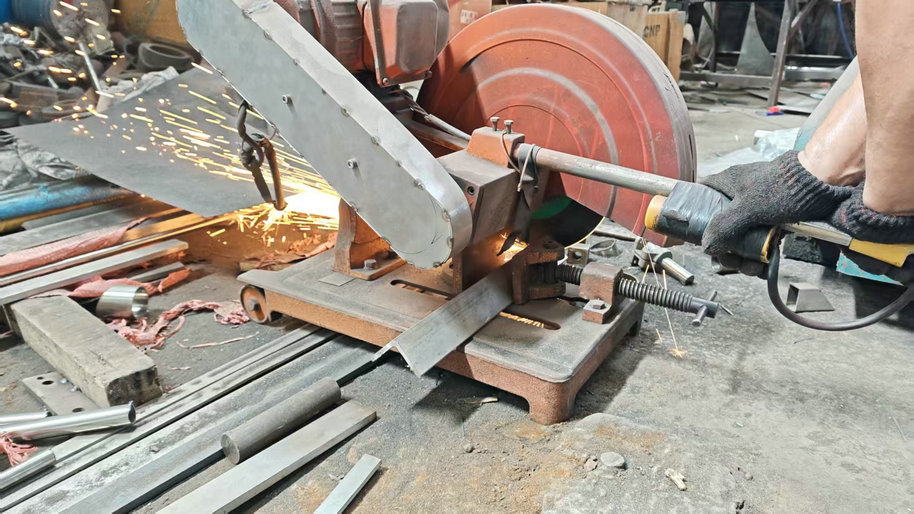
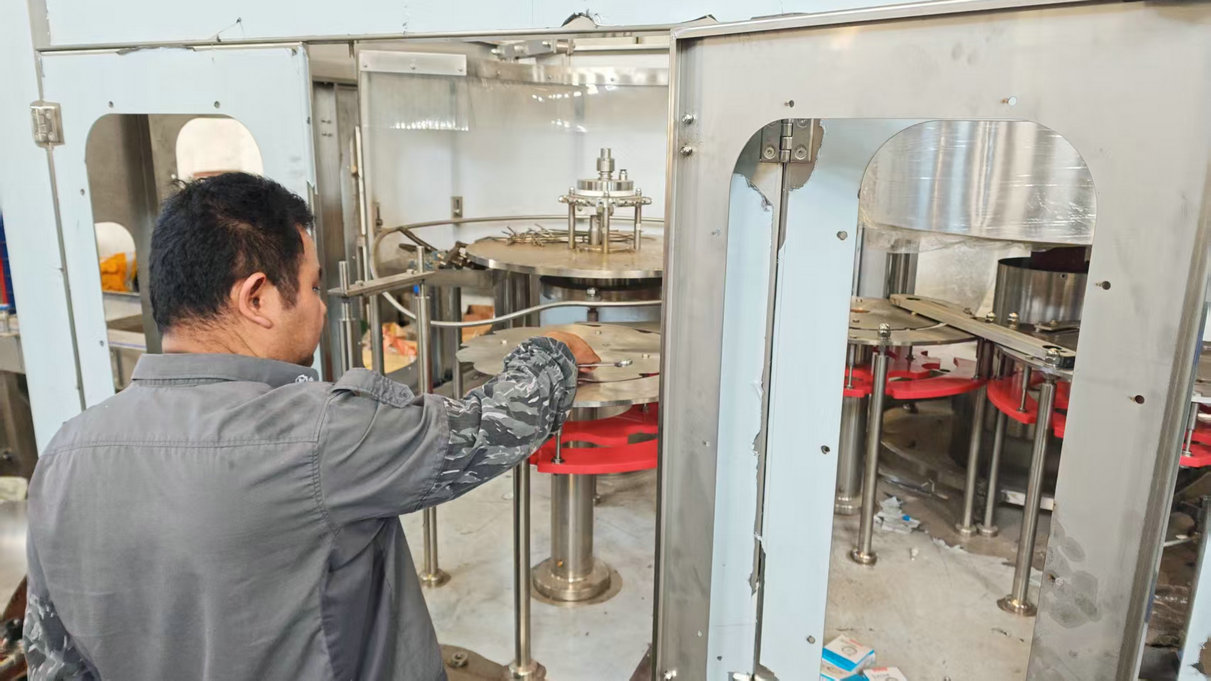
When purchasing capital equipment such as a Carbonated Soft Drink Bottling Line, global buyers face risks related to machine reliability, structural sanitary design, lead times, and after-sales service. Located in Zhangjiagang City, Jiangsu Province—the premier industrial machinery hub of China—Lofsu Packing Machinery Co., Ltd. stands out through robust engineering standards, direct manufacturing transparency, and complete quality accountability.

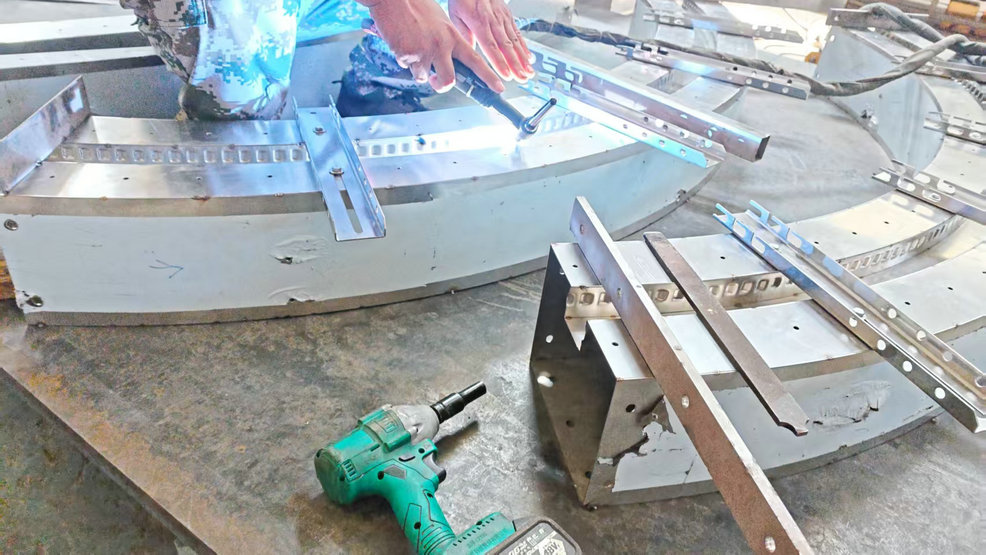
Why Global Brands Partner with Lofsu:
- 15+ Years of Industry Focus: Since 2010, Lofsu has specialized exclusively in liquid filling and packaging technology, exporting high-performance machinery to over 30 countries across North America, Europe, the Middle East, Africa, and Southeast Asia.
- Sanitary SUS304 / SUS316 Stainless Steel Construction: All liquid contact pipelines, pressure bowls, filling valves, and carbonator tanks are crafted from food-grade AISI 304 or AISI 316L stainless steel with internal mirror polishing ($Ra < 0.4\mu m$), eliminating dead corners to guarantee full CIP (Clean-in-Place) sanitation compliance.
- World-Class Component Standardization: We eliminate proprietary electrical lock-ins by utilizing globally accessible brand-name components: Siemens S7-1500 PLC systems, Schneider electrical contactors, Festo/Airtac pneumatic valves, SEW motor reducers, and Danfoss frequency converters.
- Rigorous Pre-Shipment Testing (FAT): No machine leaves our production floor without executing a continuous 48-hour dry run, followed by live bottle testing using your exact bottle preforms, caps, and liquid viscosities.
4. Global Procurement & Future Development Trends in CSD Packaging
Beverage manufacturers navigating future capital investments must consider emerging technology trends, environmental sustainability mandates, and shifting consumer preferences. Purchasing a Carbonated Soft Drink Bottling Line today requires equipment flexible enough to handle tomorrow's market demands.
Trend 1: Ambient Temperature Isobaric Filling (Energy Savings)
Traditionally, carbonated soft drinks had to be chilled to 2°C - 4°C during carbonation and filling to maintain $CO_2$ stability. However, maintaining massive industrial refrigeration plants accounts for a major portion of factory electricity costs. Modern CSD lines from Lofsu feature high-pressure, anti-foaming isobaric filling valve dynamics that allow stable filling at ambient temperatures (15°C - 20°C), drastically reducing plant thermal management expenditures (OPEX).
Trend 2: Lightweight PET Preforms & Tethered Closures
Driven by plastic reduction mandates and circular economy regulations (such as EU Directive 2019/904), bottle preforms are becoming thinner while caps are transitioning to 26/22 neck formats and tethered caps. Lofsu's filling monoblocks feature neck-handling neck-gripping stars and electronic capping torque controls that handle ultra-lightweight PET containers without mechanical distortion or paneling.
Trend 3: Smart Electro-Pneumatic Flowmeter Filling
Legacy mechanical filling valves rely on vent tubes inserted into the bottle, which require manual physical replacement during container size changeovers. Future-proof CSD lines are adopting electro-pneumatic flowmeter valves. Filling quantities are calculated electronically via magnetic-inductive flowmeters, enabling fast recipe selection on the HMI touchscreen and reducing changeover downtime from 4 hours to less than 15 minutes.
Trend 4: Flexible Multi-Beverage Line Conversion
Plant operators increasingly demand dual-use lines capable of switching between carbonated beverages, sparkling waters, and non-carbonated teas or mineral water on the same line. Lofsu counter-pressure monoblocks incorporate multi-program CIP cycles and pressure bypass valves, allowing seamless conversion between CSD mode and gravity filling mode within a single shift.
Ready to Upgrade Your Bottling Efficiency?
Contact Lofsu Packing Machinery Co., Ltd. today to discuss your project specifications, request a formal quotation, or schedule a virtual factory walkthrough.
Inquire Now5. Comprehensive FAQ for Carbonated Soft Drink Bottling Line Procurement
Q1: What is the technical difference between mechanical isobaric filling and electro-pneumatic flowmeter filling in a CSD line?
Mechanical isobaric filling uses mechanical vent tubes, springs, and mechanical levers to control pressure equalization and fill levels. It is highly cost-effective, robust, and ideal for standard, single-size bottle production. Electro-pneumatic flowmeter filling utilizes electronic pressure transducers and electromagnetic flowmeters to control fill volumes down to $\pm 1 \text{ ml}$ without vent tubes entering the bottle. This eliminates product contact contamination, eliminates vent-tube mechanical wear, accelerates changeover times between different bottle volumes, and optimizes carbonation retention.
Q2: How does Lofsu's Carbonated Soft Drink Bottling Line prevent excessive foaming during high-speed operation?
Foaming during high-speed CSD filling is caused by rapid gas expansion triggered by temperature spikes, fluid turbulence, or dissolved atmospheric oxygen. Lofsu tackles this through a 4-step engineering approach:
- Vacuum Deaeration: Eliminates gas nucleation points by removing oxygen from the water before carbonation.
- Controlled Beverage Chilling: Maintains stable liquid-gas saturation levels inside the carbonator bowl.
- Swirling Wall Flow Nozzles: Guides liquid down the interior bottle wall smoothly rather than splashing into the bottom center.
- Multi-Stage Snifting: Executes a gentle, programmed 2-stage gas decompression sequence to vent head pressure before the bottle unseals from the valve.
Q3: Can one Carbonated Soft Drink Bottling Line handle both carbonated soft drinks and still water?
Yes. Lofsu counter-pressure isobaric monoblocks are equipped with multi-mode PLC operating profiles. By disabling the $CO_2$ bowl pressurization step and reconfiguring valve actuation signals via the touchscreen interface, the equipment can operate under standard gravity or atmospheric pressure mode to fill still spring water, purified water, or non-carbonated beverages.
Q4: What $CO_2$ carbonation levels can your beverage mixing system achieve?
Our integrated automatic $CO_2$ beverage carbonators achieve precise gas dosing ranging from 2.0 to 5.0 volumes ($g/L$ gas ratios up to $10g/L$). This accommodates the full spectrum of carbonated products including light sparkling water ($2.0 - 2.5 \text{ vols}$), fruit sodas ($3.0 - 3.5 \text{ vols}$), cola ($3.5 - 4.0 \text{ vols}$), and high-fizz tonic waters ($4.5+ \text{ vols}$).
Q5: How does ambient temperature CSD filling lower operational costs (OPEX)?
Traditional CSD filling requires cooling liquid down to 2°C - 4°C using large electrical water chillers. Ambient temperature filling (operating between 15°C - 20°C) reduces or eliminates the thermal energy needed for cooling, resulting in electricity savings of up to 35% to 45% across the plant. Lofsu achieves ambient filling stability through higher bowl operating pressures ($0.45 - 0.60 \text{ MPa}$) and specialized valve flow geometry.
Q6: What is the typical lead time, shipping packaging, and installation procedure?
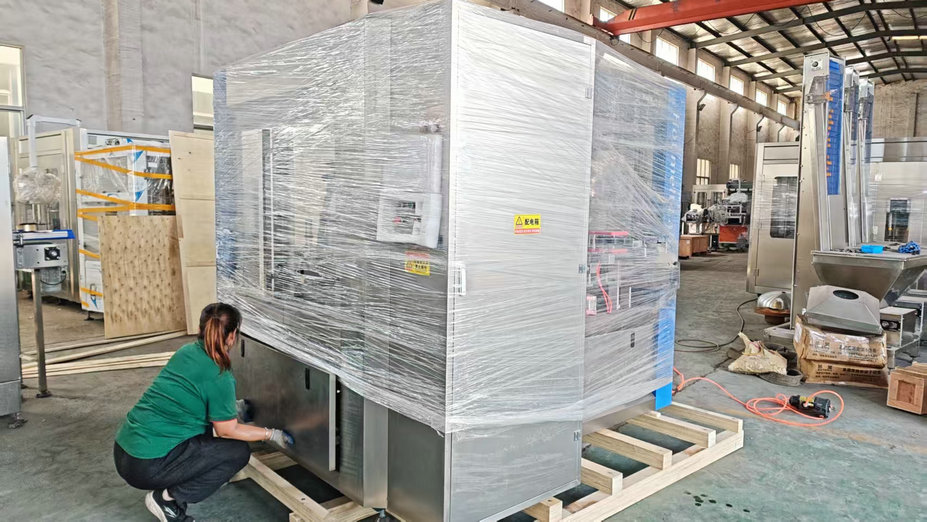
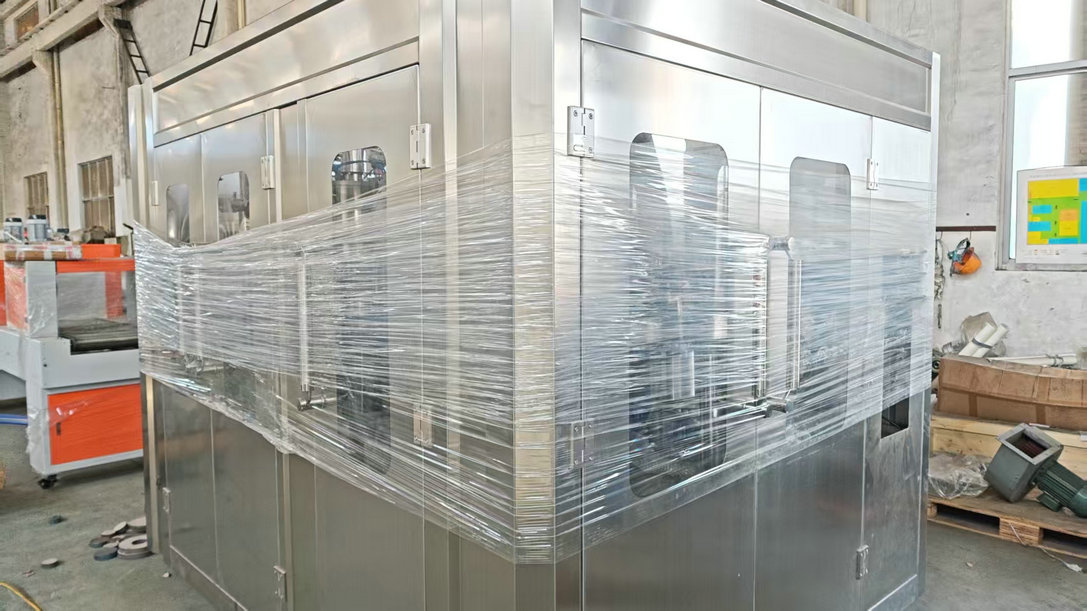
Standard manufacturing lead time for a complete Carbonated Soft Drink Bottling Line ranges between 45 to 60 days depending on line scale. All equipment undergoes seaworthy anti-corrosion oil application, vacuum plastic wrap, and solid wooden box crating. Upon factory arrival, Lofsu dispatches senior commissioning engineers to manage equipment installation, line alignment, CIP setup, operator training, and final output validation.
Q7: What preventative maintenance is required to maintain >95% OEE on a CSD line?
To ensure high Overall Equipment Effectiveness (OEE), maintenance teams should observe three core routines: 1) Daily automated CIP sanitation cycles to prevent syrup buildup in filling valves; 2) Weekly visual inspections and food-grade lubrication of mechanical lift cylinders, starwheels, and capping heads; and 3) Annual replacement of elastomer sealing gaskets, $CO_2$ vent seals, and vacuum diaphragms (included in Lofsu's standard spare parts packages).
6. Partner with Lofsu Packing Machinery Co., Ltd.
Whether you are establishing a new beverage brand, expanding existing plant capacity, or replacing outdated machinery, Lofsu Packing Machinery Co., Ltd. provides the engineering expertise, build quality, and global technical support needed to maximize your Return on Investment (ROI). Contact our technical sales engineering team today to receive a detailed quotation and complete 3D plant layout proposal.