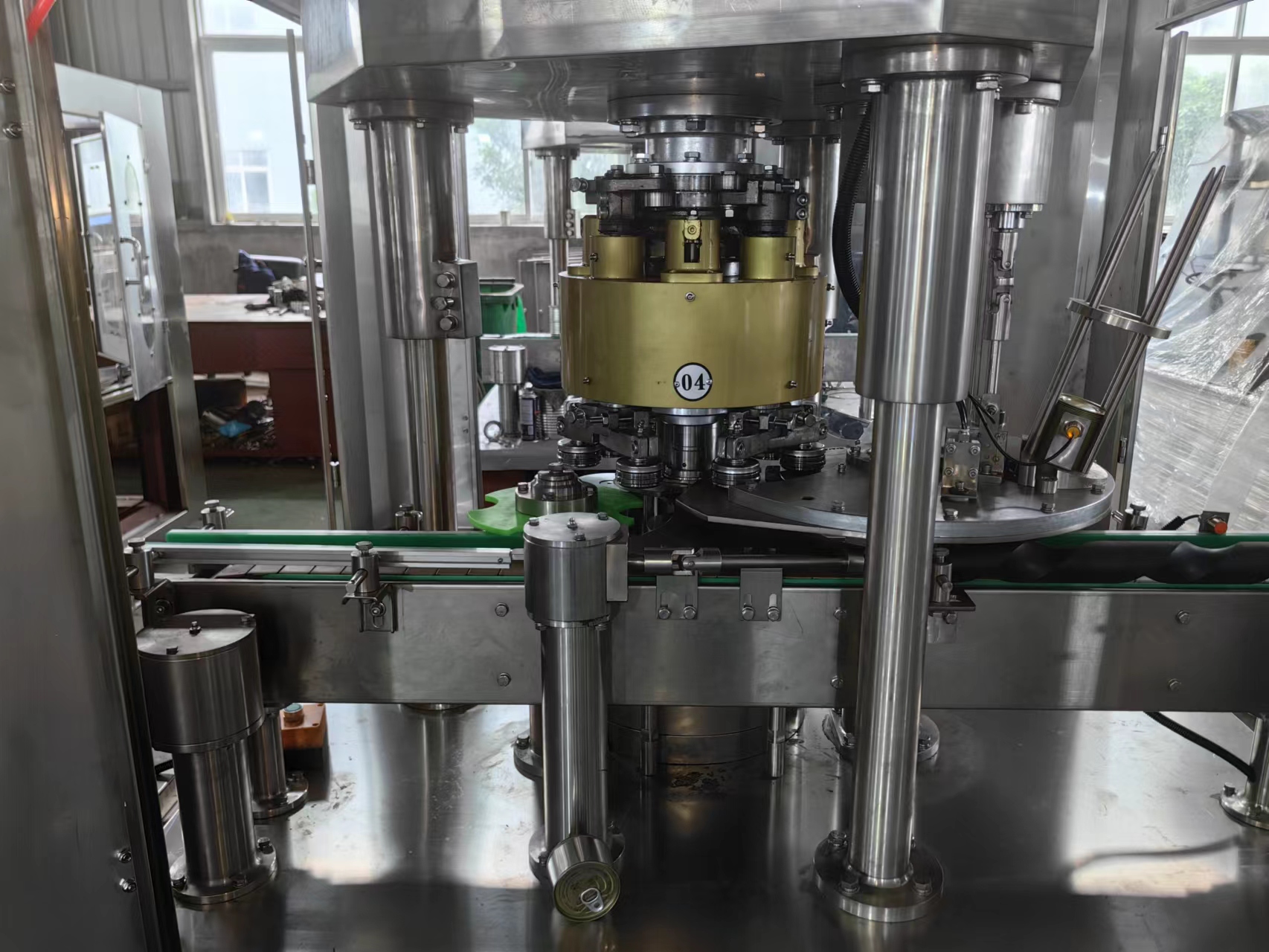
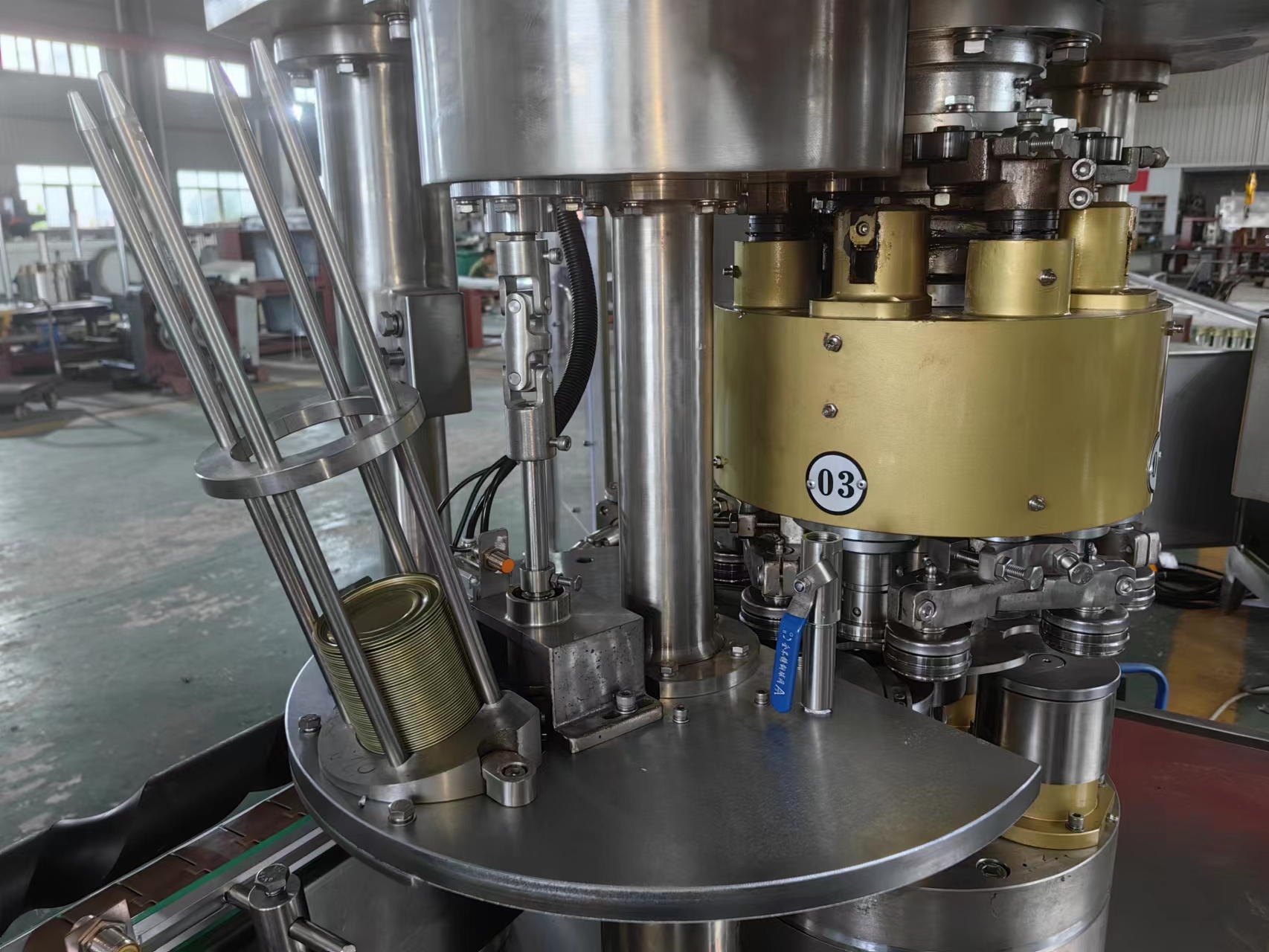
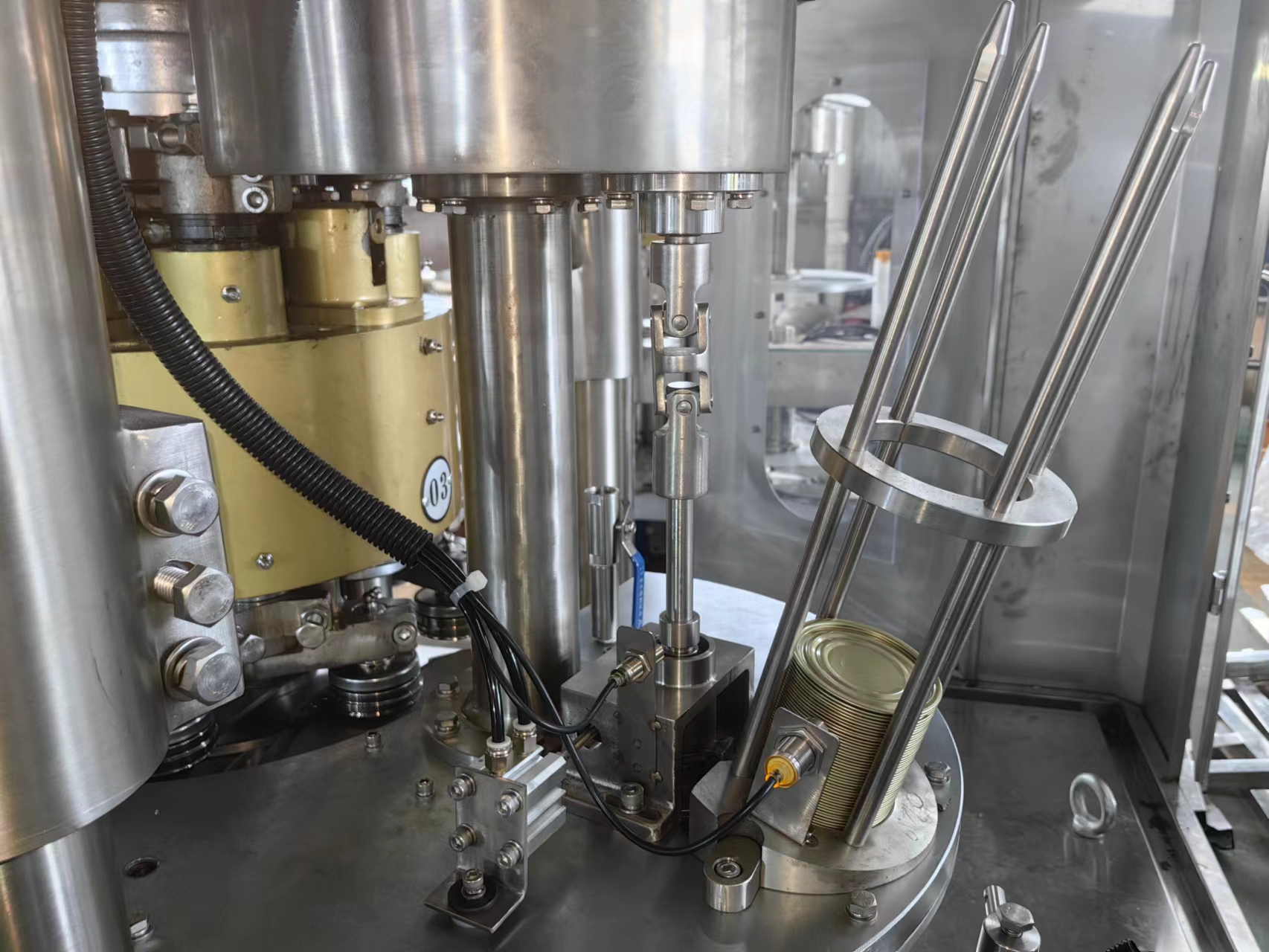
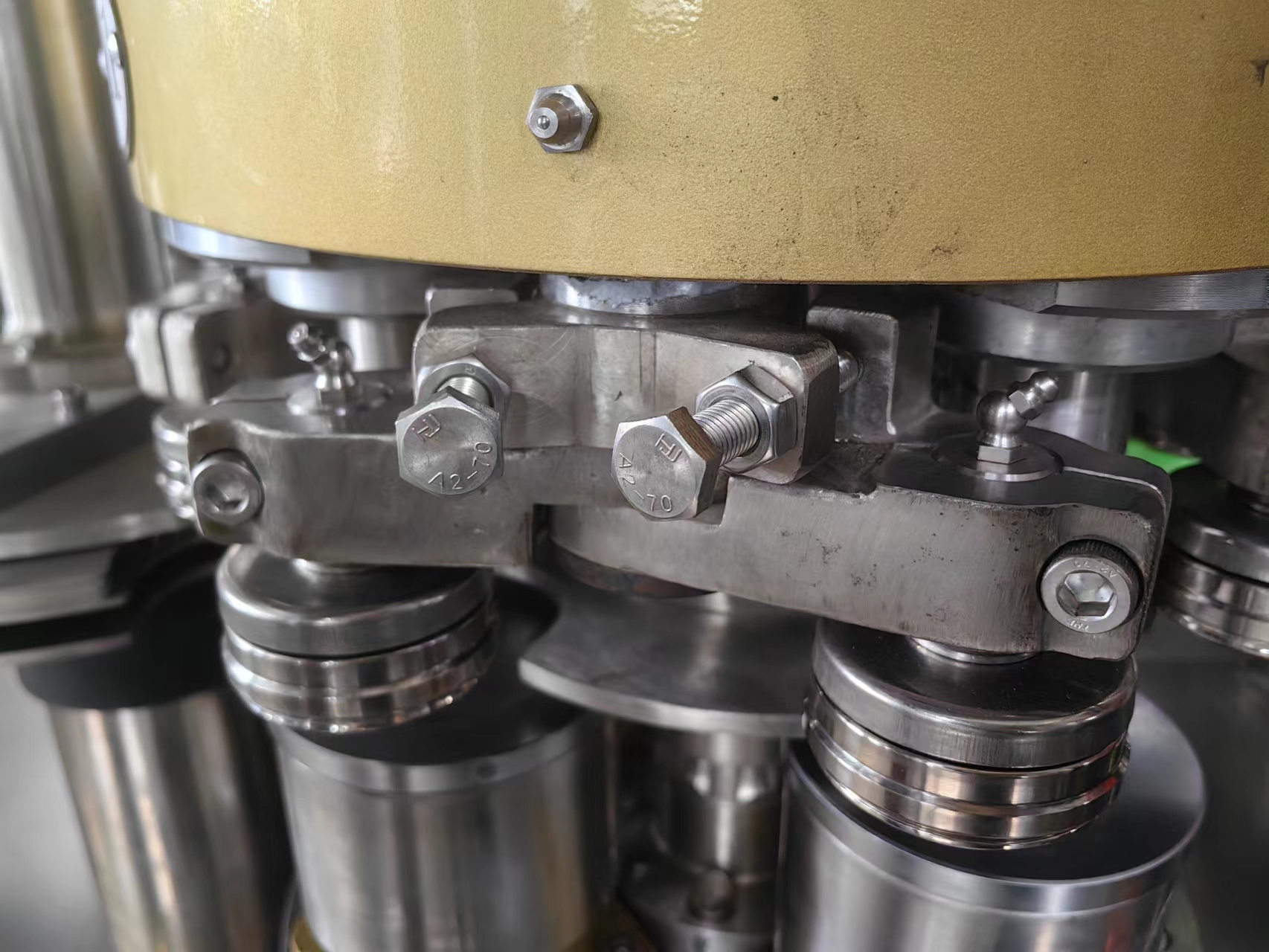
Tomato Tin Can Closing: Precisely closes cans for freshness preservation.
Sealing Machine: Streamlined production process for food processing.
Automatic Operation: Reduces manual labor and enhances productivity.
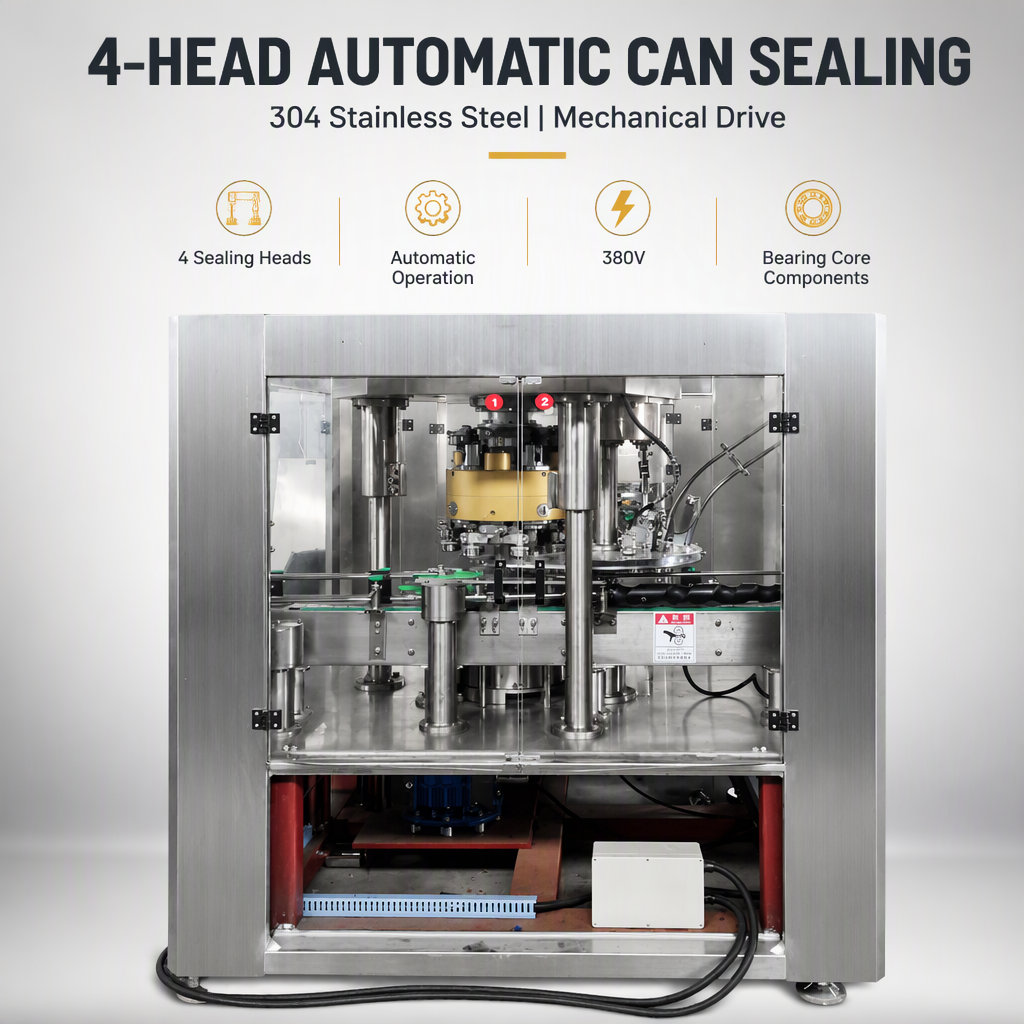
Stainless Steel Construction: Durability and hygiene ensured.
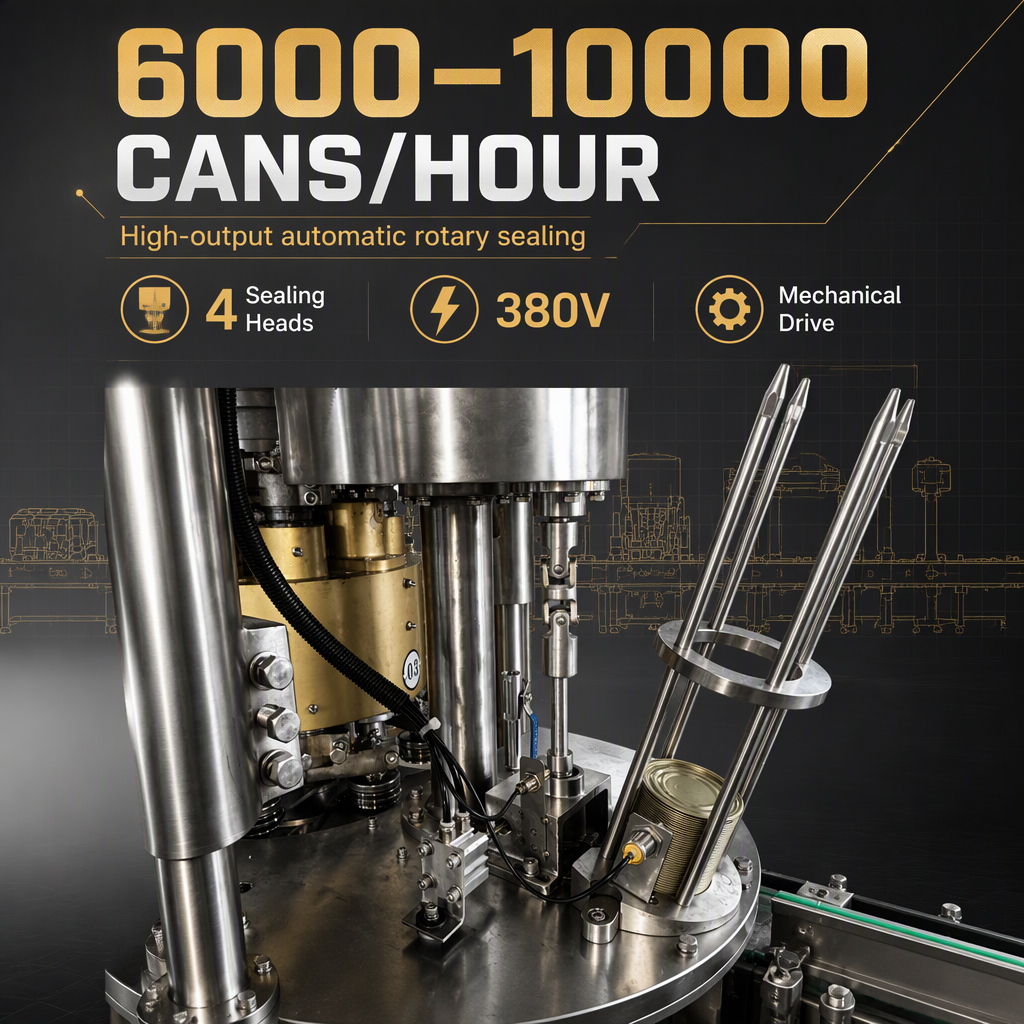
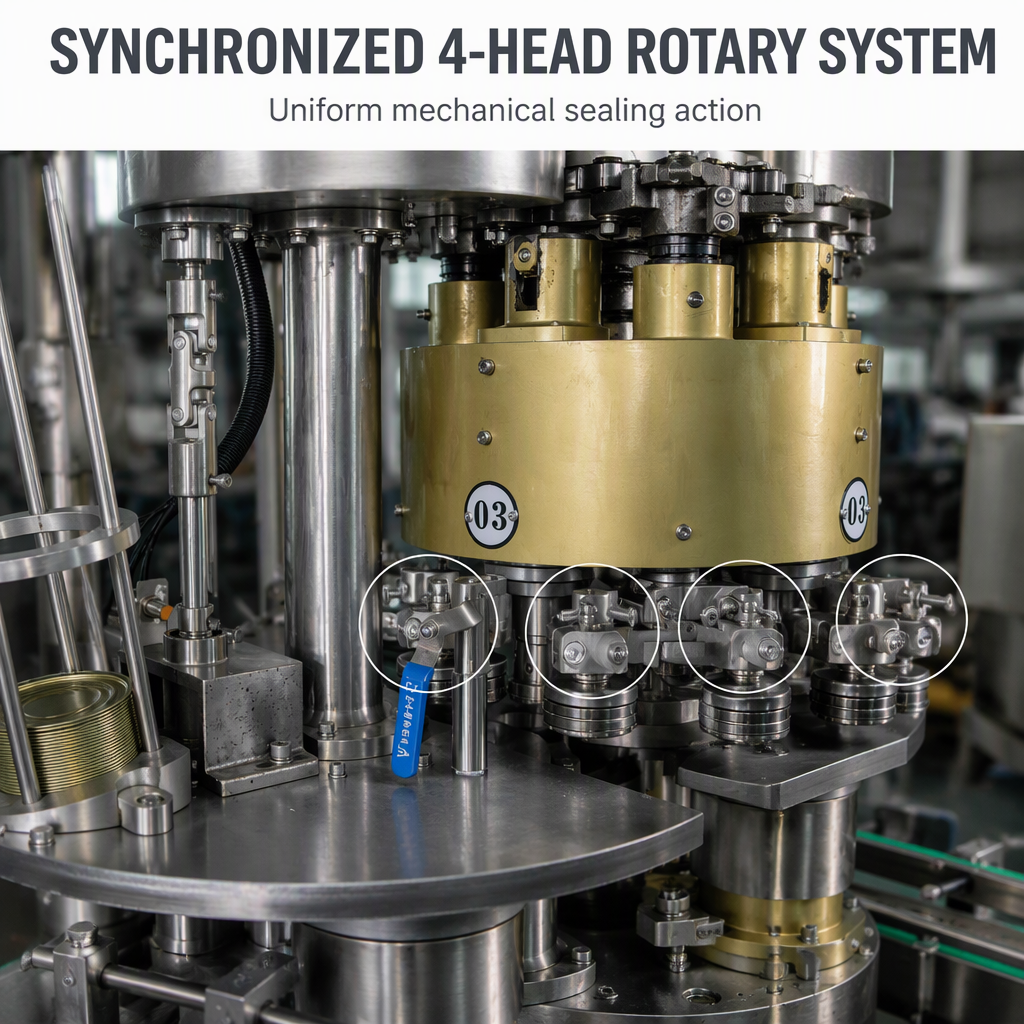
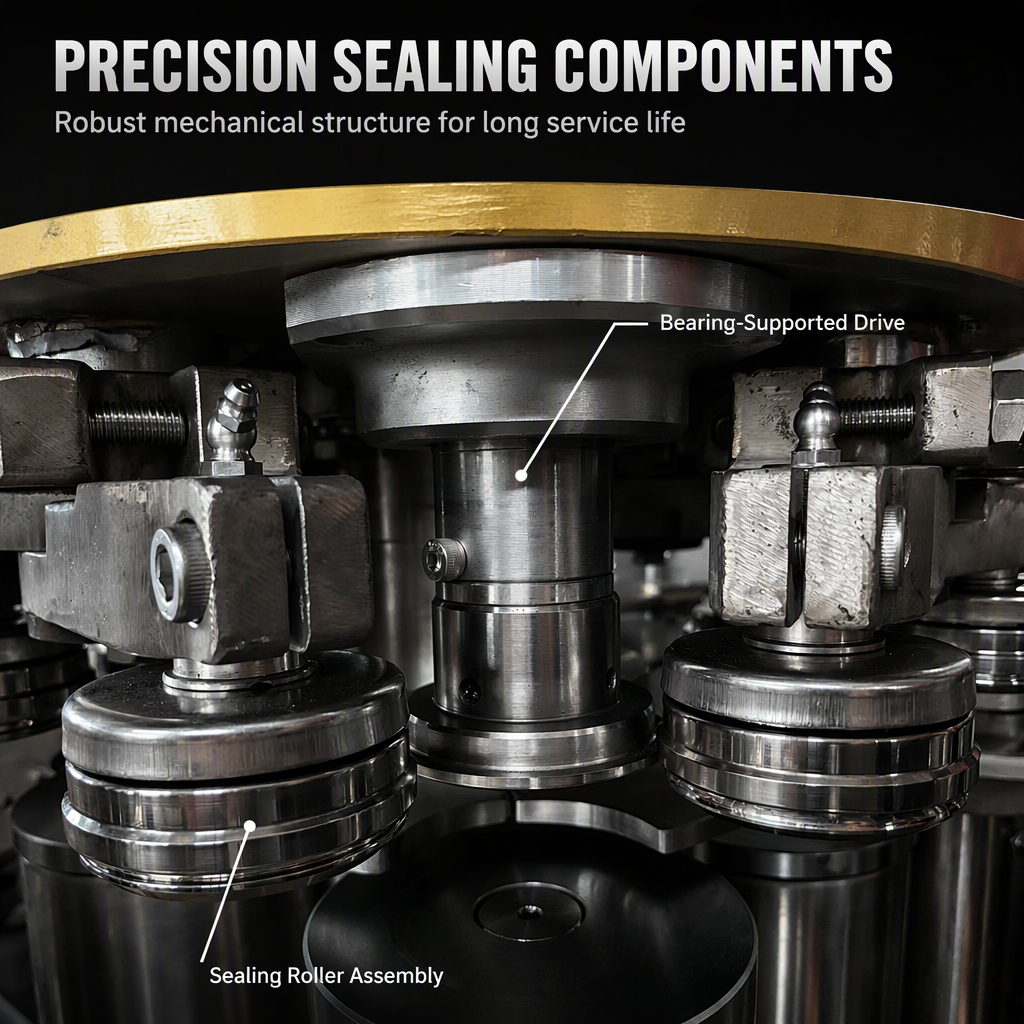
4 Heads Automatic Rotary Tomato Tin can closing sealing machine is mainly used to seal pop-top can of tinplate and aluminum alloy and PET can. It has four sealing positions with the seal component. Can revolve and circles around the main spindle when seamer is sealing.
It has function of feeding lids when can is ready, not feeding lids when can is not ready. And it is installed with automatic stopping system which acts when a can is blocked at the inlet, or the cap runs out in the cap holder. So the seamer is the ideal equipment for canned food factories and canned drink factories.
TECHNOLOGY PARAMETER
Model
FGJ-4
Capacity(cans/hour)
6000-12000
Number of sealing heads
4
Can height(mm)
50-133
Can diameter(mm)
52-100
Power(Kw)
4
Overall dimensions (L×W×H)
1530×1680×1980mm
Weight(Kg)
1600
SCENE IMAGE
DETAIL SHOT
ABOUT THE SUPPLIER
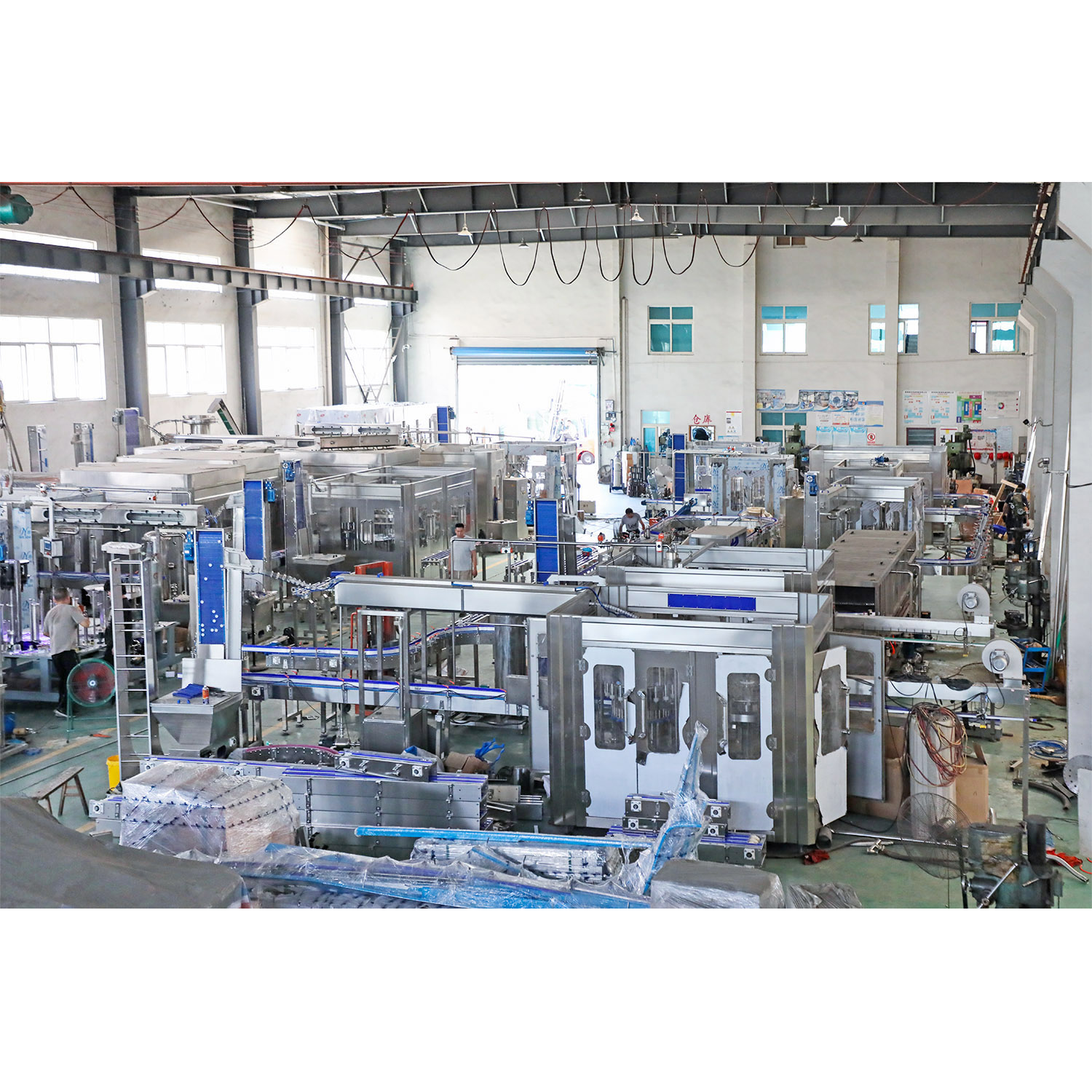
Founded in 2010, Zhangjiagang Mars Packing Machinery Co., Ltd. is an industrial machinery manufacturer based at No. 151, Zhenbei Road, Leyu Town, Suzhou, Jiangsu, China. We specialize in the development, research, and production of liquid food and beverage packing equipment, including mineral water, juice, fruit tea, carbonated beverage, 5-gallon drinking water, vinegar, oil, and wine production lines, water treatment plants, and automatic rotary tomato tin can closing sealing machines. With 11–50 employees, a 1,000–3,000-square-meter factory, and an annual output value of US$2.5 million–US$5 million, we offer OEM and design services. Our advantages include 15 years of manufacturing and export experience, installation and training teams, and fast delivery and service. We serve customers in more than 30 countries and regions, including North America, Southeast Asia, Canada, Australia, Mexico, India, and South Africa.
FACTORY PROFILE
FAQS
What production advantage does a 4-head rotary can sealer offer when my factory needs to increase output without adding another machine?
MARS 4-head rotary can sealing machine uses a rotary sealing arrangement with four sealing heads to process cans through successive sealing positions. This design can support higher production output than a comparable single-head system, depending on the machine's operating speed and configuration. The actual capacity should be matched to the upstream filling machine and downstream conveying or packaging equipment to avoid creating a bottleneck elsewhere in the line.
How can I confirm that the MARS four-head can sealer will produce a reliable double seam with my specific can and lid?
Sealing quality depends on the dimensions and materials of both the can body and end, as well as the seaming roller setup and machine adjustment. Before ordering, provide MARS with the can diameter, can height, body material, lid specifications and product application. A compatibility assessment and seam inspection using the intended packaging components can help confirm whether the selected machine configuration is suitable.
Is a 4-head rotary can sealing machine suitable for factories packing different can heights or diameters?
It may be suitable, depending on the range of can formats and the machine's adjustment capabilities. Different can diameters, heights and end profiles can require changes to format-specific components and sealing settings. MARS can review your complete can-size range before quotation so that changeover requirements, compatible tooling and the practical time needed between production runs are clearly understood.
What should I investigate if some cans show leakage or inconsistent sealing after passing through the rotary can sealer?
Potential causes include damaged can ends, incorrect component matching, unsuitable seaming adjustments, worn tooling or inconsistent can positioning. For the MARS 4-head rotary can sealer, troubleshooting should begin with inspection of the can and lid specifications, followed by examination of the finished double seam and the relevant sealing components. Establishing the cause before changing machine settings helps avoid unnecessary adjustments that could affect other sealing positions.
What details should I send MARS to select the right four-head rotary can sealing machine for my production line?
Please provide the can diameter and height, can and lid materials, target output in cans per minute or cans per hour, product type, filling method and available installation space. If possible, include drawings or samples of the can body and end. MARS can use these details to assess format compatibility, required sealing capacity and integration with your existing filling and conveying equipment.