Featured Monoblock Machinery & Packaging Systems
Direct-from-factory liquid handling equipment, container cleaning, blow molding, and end-of-line packaging lines built for high-throughput operational stability.
Industry Whitepaper: Mechanical Architecture & Safety Standards of CE Certified Monoblocks
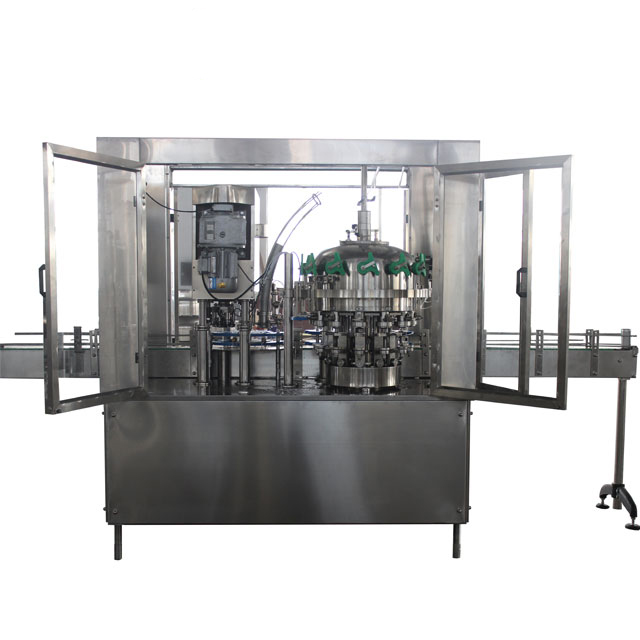
In modern beverage, dairy, and liquid chemical production, the shift from traditional, modular line configurations to integrated Monoblock (Triblock / Combiblock) systems represents a monumental leap in operational efficiency, microbiological safety, and floor footprint utilization. A monoblock machine synchronizes container rinsing, filling, and capping/seaming processes on a single structural chassis powered by a unified drive train. By removing hundreds of meters of connecting transfer conveyors between individual operations, liquid packaging plants dramatically diminish container tipping, bottle neck stress, air exposure contamination, and power draw.
For enterprise procurement officers and plant engineers, acquiring CE Certified Monoblock Filling Machines directly from certified OEM factories ensures compliance with rigorous international safety directives—specifically the European Union's Machinery Directive 2006/42/EC, the Low Voltage Directive (LVD) 2014/35/EU, and Electromagnetic Compatibility (EMC) Directive 2014/30/EU. CE certification is not merely a legal gateway for EU imports; it signifies structural steel integrity under continuous dynamic loads, emergency stop circuit safety ratings (Category 3/4 PL d/e), hygienic food-contact material traceability (SUS304/SUS316L stainless steel), and operator protection against mechanical shear points.
Technical Gain Insight: Monoblock integration eliminates neck-handling transfer gaps. By maintaining continuous positive grip on container necks (PET) or base pedestals (Glass/Aluminum Cans), product spillage during transfer is reduced to <0.01%, while sterile laminar airflow can be localized over a 75% smaller cleanroom footprint.
1. Core Engineering Principles of Monoblock Triblocks
A standard 3-in-1 Monoblock system operates via a continuous rotary starwheel network. Empty containers enter the rinsing module, where electromagnetic or mechanical grippers flip bottles 180 degrees over pressurized water or sterile air injection nozzles. Once drained, containers return to an upright orientation and are passed seamlessly into the filling turret without touching side rails or outer guide channels.
Depending on the liquid rheology and carbonation pressure, filling nozzles utilize specific thermodynamic filling valves:
- Atmospheric Gravity Filling: Ideal for non-carbonated mineral water, purified drinking water, and low-viscosity non-perishable liquids. Fill levels are determined by vent tube height inside the bottle neck.
- Isobaric (Counter-Pressure) Filling: Essential for carbonated soft drinks (CSD), sparkling water, energy drinks, and beer. The filling valve pressurizes the container with CO2 equal to the tank pressure before opening the liquid seal, preventing CO2 breakout and foaming.
- Hot Volumetric & Thermal Recirculation Filling: Designed for juices, teas, and functional beverages filled at temperatures between 85°C to 92°C. System features continuous thermal loops to prevent temperature drop in filling valves during micro-pauses.
- Servo-Controlled Magnetic Flowmeter / Volumetric Piston Filling: High-precision non-contact filling for viscous foods (edible oil, sauces, ketchup) or high-value spirits and pharmaceuticals, achieving dosing accuracies within ±0.2%.
Technology & Development Trends in Monoblock Filling
Key technological shifts reshaping liquid packaging efficiency, hygienic integrity, and smart factory integration.
Ultra-Clean & Aseptic Enclosures
Integration of HEPA H14 laminar flow hoods directly on top of the monoblock enclosure. Positive pressure environments prevent airborne micro-organisms from contacting open liquid channels, extending product shelf-life without chemical preservatives.
Automated CIP / SIP Cleanability
Modern monoblocks incorporate automated CIP (Clean-in-Place) dummy cup positioning. Sanitizing solutions (caustic, hot water, ozone, or peracetic acid) circulate through liquid supply tanks and filling valves without requiring manual operator intervention.
Servo-Driven Capping & Torque Control
Replacing traditional magnetic clutch capping heads with independent servo motors per capping spindle. Allows real-time digital adjustment of application torque, eliminating split caps, loose seals, and thread damage on PET preforms.
Future Procurement Trends for Industrial Liquid Packaging Lines
As procurement departments and supply chain directors evaluate equipment investments over a 10 to 15-year lifecycle, purchasing criteria have evolved beyond initial capital expenditure (CAPEX) to embrace holistic metrics like Operational Efficiency (OEE), Total Cost of Ownership (TCO), energy conversion efficiency, and container material agility.
Trend 1: Lightweight Container Agility & rPET Compatibility
Global sustainability mandates are forcing beverage brands to adopt ultra-lightweight PET preforms (down to 9.5 grams for 500ml bottles) and incorporate up to 100% Recycled PET (rPET). Standard traditional starwheels and mechanical grippers deform thin-walled containers under high acceleration. Future-proof monoblock procurement requires neck-suspended pneumatic starwheels, soft-touch star-guides, and low-impact neck transfer systems engineered specifically for fragile structural geometries.
Trend 2: Multi-Liquid Hybrid Monoblocks
Co-packing factories and mid-scale beverage manufacturers no longer dedicate lines strictly to a single liquid category. Modern procurement specifications demand hybrid monoblock filling units capable of running still water on Monday, carbonated soft drinks on Wednesday (via switchable isobaric valves), and warm hot-fill juice on Friday (via thermostatic bypass loops). Quick-changeover starwheels and recipe-driven HMI controls reduce line changeover times from 6 hours to under 45 minutes.
Trend 3: Smart IoT Diagnostics & Predictive Maintenance
Factory buyers prioritize monoblocks equipped with Industry 4.0 connectivity (Siemens MindSphere, Omron Sysmac, or Allen-Bradley EtherNet/IP). Embedded vibration sensors on main rotary bearings, temperature sensors on vacuum pumps, and pneumatic pressure transducers detect micro-anomalies before mechanical failure occurs, triggering automated maintenance prompts on screen and sending operational reports to offsite plant managers.
Monoblock Packaging Technology Specification Matrix
A comparative engineering reference for technical procurement teams sizing filling lines against target liquid categories and container types.
| Equipment Category | Filling Mechanism | Target Product | Capacity Range (BPH) | Hygiene / Valve Alloy | CE Certification Standard |
|---|---|---|---|---|---|
| CGF Water Triblock | Atmospheric / Micro-gravity | Purified & Mineral Water | 2,000 - 36,000 BPH | SUS304 / SUS316L contact | EN ISO 12100:2010, EN 60204-1 |
| DCGF Isobaric Triblock | Isobaric Counter-Pressure | CSD, Beer, Sparkling Wine | 3,000 - 24,000 BPH | SUS316L Electro-polished | 2006/42/EC, PED 2014/68/EU |
| RCGF Hot-Fill Triblock | Thermal Recirculation Flow | Juice, Tea, Energy Drinks | 2,000 - 20,000 BPH | SUS316L, CIP Return Loop | EN 415-2 Packaging Machine Safety |
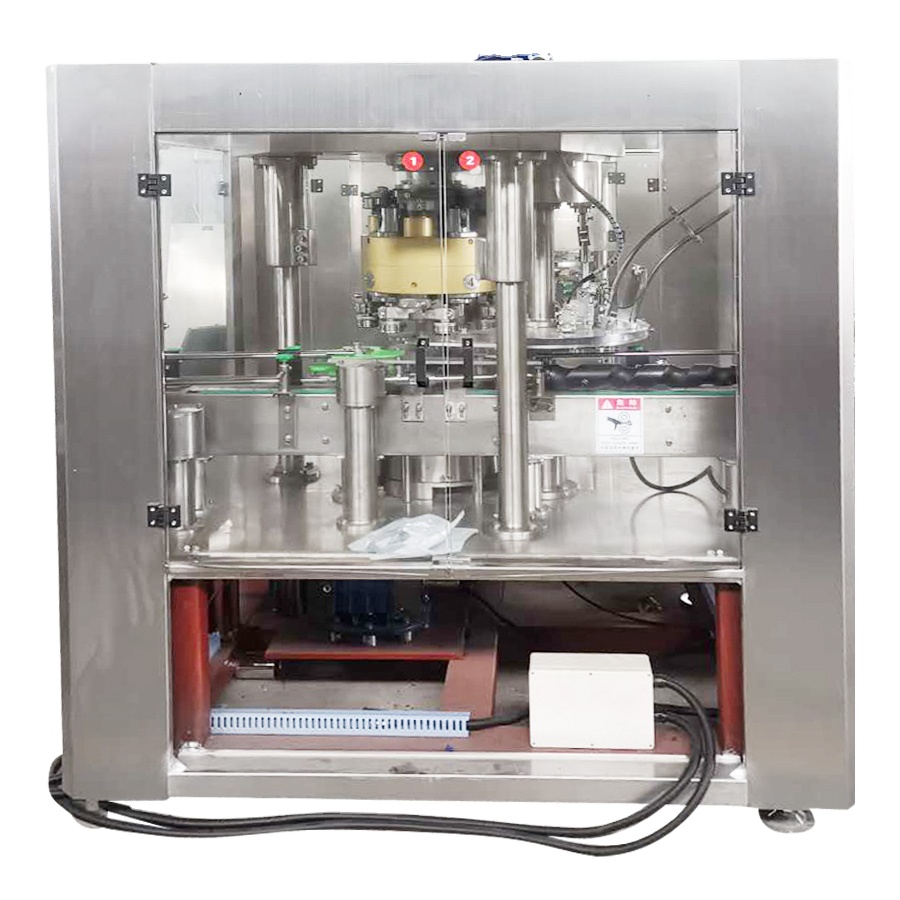
| Can Filling & Seaming | Mechanical / Pneumatic Seam | Aluminum & Tin Cans | 1,500 - 18,000 CPH | Heavy Duty Alloy Steel Seamers | 2006/42/EC Machinery Safety |
| Volumetric Piston / Flowmeter | Positive Displacement / Servo | Edible Oil, Sauces, Vinegar | 1,000 - 12,000 BPH | PTFE / Viton Seals, SUS316L | EMC 2014/30/EU, LVD 2014/35/EU |
Enterprise Profile & Manufacturing Capabilities: Lofsu Packing Machinery
Founded in 2010, Lofsu Packing Machinery Co., Ltd. (Lofsu) is located in Zhangjiagang City, Jiangsu Province—China’s premier industrial manufacturing cluster for beverage equipment and liquid packaging machinery. Over 15 years of dedicated engineering research, Lofsu has established itself as an authoritative manufacturer and global exporter of turnkey beverage bottling lines, water treatment plants, container blowing systems, filling monoblocks, labeling machines, and end-of-line packaging automation.
Operating from an audited 1,000 to 3,000 m² specialized assembly plant, Lofsu exports over 70% of its annual production volume to clients across 30+ countries in North America, Southeast Asia, the Middle East, Africa, South America, and Europe. With comprehensive OEM/ODM customization capabilities, electrical systems are tailored precisely to regional grid voltages ranging from 220V single-phase to 450V three-phase at 50Hz or 60Hz.
Procurement & Technical FAQ
Expert engineering answers to common technical queries raised by plant directors, quality managers, and purchasing agents.
Request a Custom Monoblock Line Engineering Proposal
Submit your container specifications, filling liquid parameters, and target output capacity. Our senior application engineers will provide complete CAD plant layouts, machine configurations, and factory-direct quotations within 24 hours.
Inquire Now