Featured Packaging & Processing Equipment
Engineered to strict CE standards for seamless integration into Philippine liquid food, condiment, beverage, and sauce manufacturing lines.



Engineering Whitepaper: Sauce Filling Technology in the Philippines
An in-depth technical report on fluid dynamics, thermal pasteurization requirements, corrosion mitigation, and operational efficiency for Philippine condiment processors.
1. Executive Brief & Fluid Rheology Spectrum
The Philippine food processing sector represents one of Southeast Asia's fastest-growing condiment manufacturing hubs. Driven by rich culinary heritage and expanding retail demand across Luzon, Visayas, and Mindanao, industrial condiment producers face unique engineering challenges. Liquid sauces produced in the Philippines range from highly viscous, non-Newtonian fluids (such as banana ketchup, thick chili pastes, sweet lechon sauce, and mayo-based dressings) to low-viscosity, high-salinity corrosive liquids (such as soy sauce / toyo, fermented fish sauce / patis, and coconut vinegar / suka).
Achieving commercial efficiency requires moving away from generic liquid fillers toward servo-driven volumetric piston filling systems and specialized rotary vacuum cappers. Standard gravity or overflow fillers frequently suffer from volumetric drift, nozzle dripping, air-pocket entrapment, and severe thermal shear degradation when handling thick syrups or suspended solids.
- High-Viscosity Sauces (>10,000 cP): Requires positive displacement piston cylinders, heated jacketed hoppers (60°C–85°C), and pneumatically actuated drip-free rotary cut-off nozzles.
- High-Salinity Condiments (Patis/Toyo): Requires food-grade SUS316L stainless steel contact parts, acid-resistant PTFE seals, and IP65 washdown-rated enclosures to withstand corrosive salt air and acidic fumes.
- Particulate Sauces (Sweet Chili, Garlic Sauces): Demands large-bore rotary valve blocks that prevent seed bridging or shear damage to solid particulate pieces.
Core Technical Solutions for Condiment Production
Servo Volumetric Piston Fillers
Utilizes precision-machined SUS316L piston cylinders driven by Schneider or Siemens servo motors. Delivers repeatable filling precision within ±0.5% for thick paste, banana ketchup, and mayonnaise in glass or PET bottles.
Tropicalized 60Hz Electrical Systems
Custom-engineered motor windings and frequency drives built specifically for the Philippine electrical grid (220V, 380V, 440V at 60Hz). Features tropicalized insulation and heavy-duty cooling fans to withstand ambient room temperatures exceeding 40°C.
Linear Vacuum Twist Cappers
Essential for glass jars (lug caps) containing hot-filled sauces. Draws a mechanical vacuum inside the bottle neck before hermetic sealing, guaranteeing mold prevention, extended retail shelf-life, and distinct vacuum safety button pops upon opening.
Drip-Free Diving Nozzle Systems
Features bottom-up filling stroke control. Filling nozzles lower to the bottom of the bottle and lift synchronously with the liquid surface to prevent aeration, splashing, bubble formation, and neck contamination.
Automated CIP Clean-in-Place Integration
Integrated pneumatic three-way sanitary valves and quick-dismantle tri-clamp connections allow automated CIP flushing with hot water and sanitizing solutions without disassembling pistons or valves between batch flavor changes.
PLC & HMI Touchscreen Controls
Intuitive user interface with multi-recipe memory storage (up to 50 product profiles). Operators can switch bottle volumes (e.g., 250ml glass jar to 1000ml PET bottle) in seconds via digital touchscreen inputs without mechanical wrenching.
2. Localized Philippine Production Scenarios & Operational Challenges
Manufacturing condiments in the Philippines requires machinery engineered to withstand strict environmental and regional infrastructure parameters. Plant operators in provincial regions such as Laguna, Cavite, Bulacan, Pampanga, and Metro Cebu face operational realities that standard machinery importers often oversee:
Scenario A: Hot-Fill Processing for Banana Ketchup & Lechon Sauce
Banana ketchup relies on starch hydration and thermal cooking, filled at target temperatures between 80°C and 88°C to achieve commercial sterility without chemical preservatives. Our filling systems incorporate thermal insulated oil or electric-heated double-jacket hoppers with continuous variable-speed anchor agitators. This prevents starch setting, wall scorching, and product separation while maintaining thermal equilibrium prior to filling into glass bottles or heat-resistant PET containers.
Scenario B: Fermented Fish Sauce (Patis) & Vinegar (Suka) Corrosion Defense
Fermented patis contains high sodium chloride concentrations (often 20% to 25% salinity), while natural coconut palm vinegars carry high acetic acid levels. Standard SUS304 stainless steel exposed to warm, humid Philippine coastal plant environments will exhibit pitting corrosion within months. Lofsu engineers utilize titanium-stabilized SUS316L stainless steel for all wetted liquid paths, combined with corrosion-proof fluororubber seals, Hastelloy fluid springs, and isolated electrical cabinets.
Scenario C: Power Grid Stabilization & Voltage Flexibility
Unlike continental power systems, the Philippine national grid predominantly operates on 220V 60Hz single-phase or three-phase power, with occasional 440V industrial distribution in major manufacturing zones. Voltage fluctuations during peak afternoon grid loads can damage sensitive PLC boards. Lofsu installs wide-input voltage tolerance transformers, surge protectors, and Schneider premium VFDs, ensuring consistent filling accuracy regardless of external grid fluctuations.
- FDA Philippines Compliance: Meets strict hygiene guidelines set by the Food and Drug Administration Philippines (FDA AO No. 2014-0029) for food-contact surface materials and zero-dead-leg valve architecture.
- Port & Logistics Logistics: Compact modular machine foot-printing designed to fit standard 20ft and 40ft HQ ocean containers, facilitating direct customs clearance at South Harbor / North Harbor Manila, Batangas Port, or Cebu International Port.
- High-Humidity Pneumatic Sealing: Moisture-separator air filter assemblies and stainless pneumatic cylinders designed to endure relative humidity levels above 85% RH without internal rust binding.
3. Philippine Condiment Market Growth & Packaging Trends
The Philippine retail market has transitioned rapidly from traditional sachet refill packets to automated, high-end rigid packaging. Driving factors include:
1. Shift Toward Glass Jars with Vacuum Lug Caps: Gourmet sauces, crab paste (aligue), chili garlic oils, and specialty bagoong makers are upgrading from manual batch hand-capping to linear automatic vacuum capping machinery (Product Model: Electric Automatic Linear Vacuum Twist Capper). Vacuum sealing guarantees leak-proof export shipping to overseas Filipino markets across North America, the Middle East, and Europe.
2. Adoption of PET Bottle Lines for Mass Retail: High-speed PET stretch blow molding machines paired with automatic rotary or linear filling lines allow producers to reduce freight weight and container breakage compared to traditional heavy glass bottles.
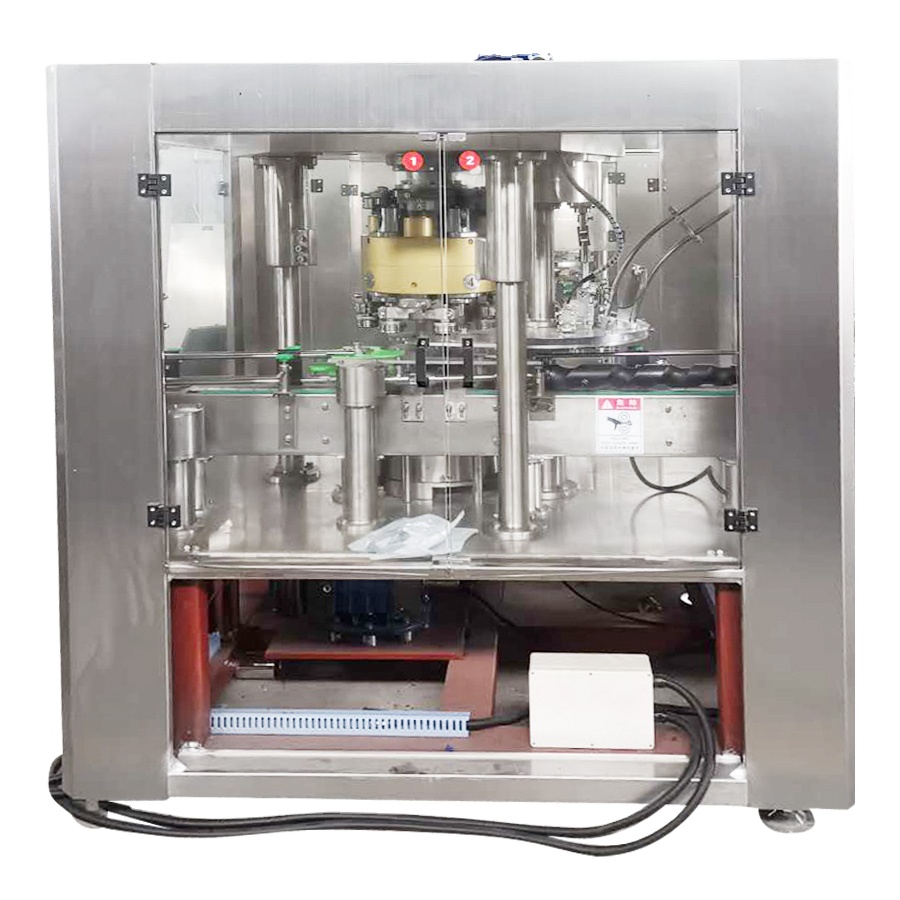
3. Canned Condiments & Institutional Catering Supplies: Large-scale institutional suppliers supplying fast-food chains (Jollibee, Mang Inasal, Chowking ecosystem suppliers) are implementing high-volume metal tin can fillers and seaming systems (Product Model: Four Head Rotary Can Sealing Machine) for bulk 1kg to 5kg sauce distribution.
Why Overseas Buyers & Philippine Manufacturers Partner with Lofsu
Lofsu Packing Machinery Co., Ltd. (based in Zhangjiagang, Jiangsu, China) brings over 15 years of dedicated liquid packaging manufacturing expertise directly to the Philippine market.
Rigorous Factory Acceptance Testing (FAT)
Before any equipment leaves our 3,000m² factory floor, we run full 48-hour continuous wet tests utilizing your exact sauce samples, glass jars, PET bottles, or tin cans. Factory test videos and volumetric verification reports are provided for buyer sign-off.
Overseas Engineer Dispatch to PH
We provide full turn-key installation, commissioning, and staff training services on-site across Manila, Cebu, Davao, and regional provinces. Our multilingual technicians ensure your plant operators master daily maintenance, recipe setup, and sanitation protocols.
CE Certified & Standardized Spare Parts
All machines comply fully with CE Directive 2006/42/EC. Electrical and pneumatic components are sourced from tier-1 global brands (Siemens, Schneider, Airtac, Omron), ensuring replacement wear-and-tear parts can be sourced locally in the Philippines when needed.
Request a Customized Sauce Filling Line Layout & Factory Price Quote
Consult directly with our senior application engineers. We will analyze your sauce viscosity, bottle drawings, target outputs (BPH), and facility dimensions to provide a complete turn-key proposal within 24 hours.
Contact UsFrequently Asked Questions by Philippine Buyers
Technical and commercial guidance for purchasing, importing, and operating sauce filling machinery in the Philippines.
Which filling machine mechanism is best suited for thick banana ketchup and lechon sauce? +
For viscous, non-Newtonian condiments like banana ketchup, sweet chili sauce, and lechon sauce, a Servo-Driven Volumetric Piston Filling Machine with a Jacket-Heated Hopper is the industry standard. Gravity or flow-meter fillers struggle with high viscosity and temperature variations. Piston fillers physically pull a precise volume of product into a cylinder and discharge it through pneumatically controlled rotary valves, ensuring an exact fill weight within ±0.5% tolerance regardless of sauce thickness.
Can your machinery handle both 220V and 440V electricity at 60Hz in the Philippines? +
Yes. Standard machinery produced for domestic Chinese or European markets runs at 380V/50Hz. However, for all our Philippine client shipments, our factory configures motor windings, transformers, heating elements, and variable frequency drives (VFDs) explicitly for 220V single-phase / three-phase or 440V three-phase at 60Hz. This guarantees smooth plug-and-play installation without motor overheating or VFD frequency tripping.
How do you prevent dripping and neck contamination when filling sticky or stringy sauces? +
Lofsu sauce fillers feature two critical design mechanics: First, servo-controlled bottom-up diving nozzles that sink into the bottle base and lift synchronously during the liquid discharge to prevent air pocket formation and splashing. Second, pneumatic anti-drip cut-off nozzles with vacuum blowback that instantly shut off fluid flow at the end of the stroke, preventing sticky drops from landing on the bottle neck or capping threads.
What is the lead time, shipping port, and shipping duration to the Philippines? +
Manufacturing lead time for standard linear sauce filling and capping lines ranges between 25 to 35 business days following bottle sample approval. Ocean freight shipping from Shanghai or Ningbo port directly to Manila South/North Harbor takes approximately 5 to 7 days, while transit to Cebu or Davao takes roughly 8 to 12 days. We support FOB, CFR, CIF, and DDP trade terms.
How does Lofsu ensure food safety compliance with FDA Philippines regulations? +
All wetted fluid contact surfaces are constructed strictly from food-grade stainless steel 304 or 316L with surface polished roughness Ra < 0.4μm. Sealing rings and piston cups are manufactured from FDA-compliant food-grade PTFE or silicone materials. All piping uses quick-release sanitary tri-clamp fittings, eliminating blind internal corners or dead-legs where food residue or bacteria could accumulate.
What documentation and spare parts are included with the machinery shipment? +
Every machine is dispatched with a comprehensive operation and maintenance manual in English, electrical wiring schematics, PLC ladder diagrams, CE compliance certificates, and an initial 1-to-2 year wear-and-tear spare parts kit (including O-rings, heating tubes, air pipes, sealing gaskets, and extra pneumatic fittings).
Ready to Automate Your Condiment Packaging Line?
Join dozens of successful food manufacturers across Luzon, Visayas, and Mindanao who trust Lofsu for reliable, durable, and highly accurate sauce filling, vacuum capping, and labeling automation.
Contact Us